
From Philly and the Pa. suburbs to South Jersey and Delaware, what would you like WHYY News to cover? Let us know!
As Pennsylvania deals with one of the nation’s largest measles outbreaks of the past three decades, doctors and public health experts predict that the United States will soon lose its global measles elimination status. The U.S. achieved that designation 26 years ago after the viral disease was declared eradicated following mass vaccination campaigns.
A scientific panel of the Pan America Health Organization, a branch of the World Health Organization, met this week. An announcement on the country’s elimination status is expected early next week.
“It is a step backward, but in some ways, it doesn’t matter,” pediatrician Dr. Paul Offit, director of the Vaccine Education Center at the Children’s Hospital of Philadelphia, said of the possible status change.
“I think measles is endemic in this country. I think it has gained a foothold. I think we’re going to be seeing measles again, not only this year, but next year and the year after and until we get on top of this with vaccination,” he said.
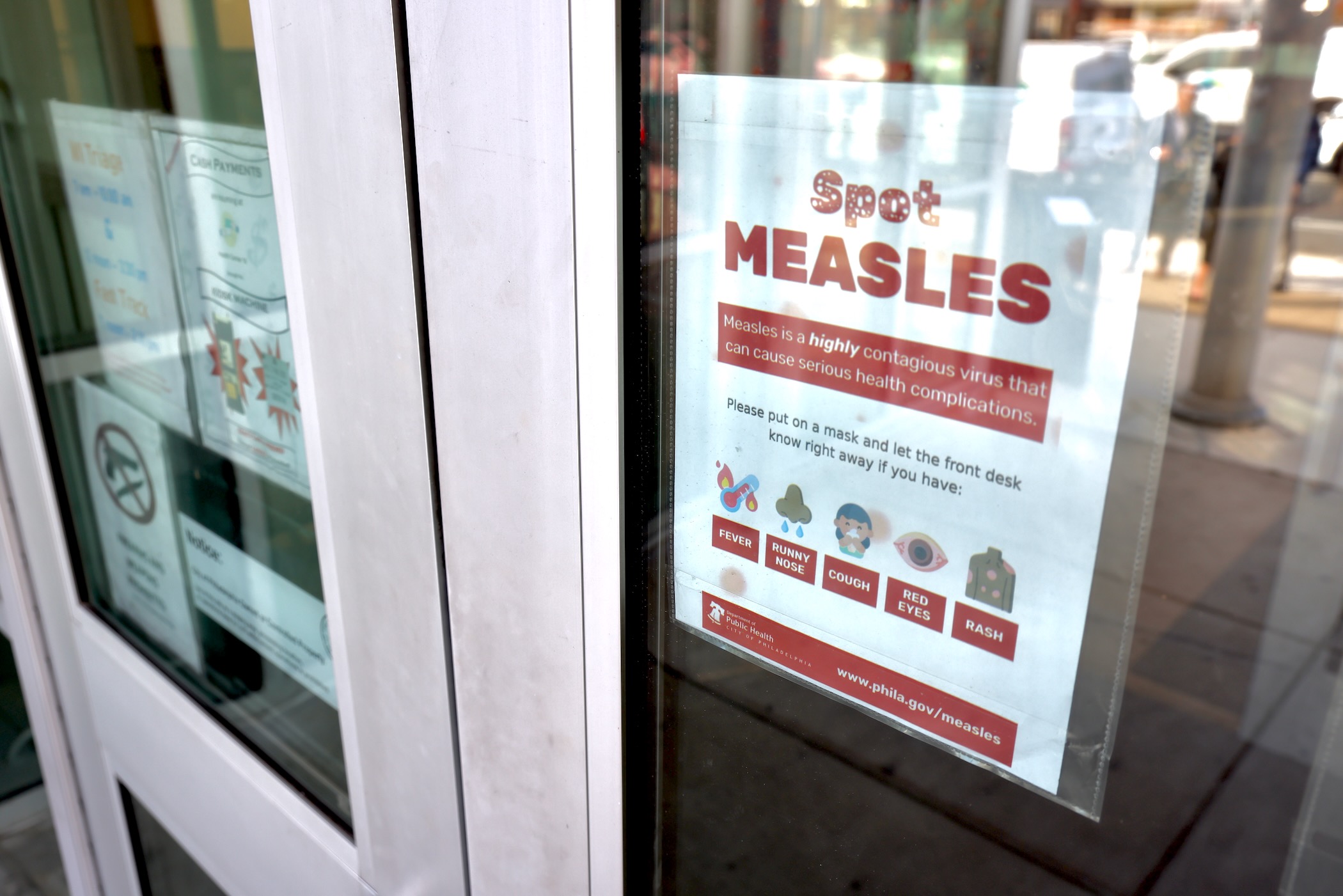
More than 1,500 Pennsylvania residents have been infected with the highly contagious measles virus so far this year, with nearly all cases occurring in unvaccinated adults and children, state data shows.
The state has also reported seven measles-associated deaths, including two infants, as of Nov. 13.
Many infections are linked to an outbreak that began in Lancaster County in April. In total, 46 of the state’s 67 counties have reported measles cases this year.
Public health teams across the state have ramped up vaccination efforts by offering the combination measles, mumps and rubella shots at people’s homes, community pop-up clinics and inside recreational vehicles.
Meanwhile, doctors, nurses, community health workers, epidemiologists, virologists and others have been working nonstop to test symptomatic people, perform contact tracing, treat hospitalized residents, increase public awareness of measles symptoms and investigate deaths, said Lisa McHugh, state epidemiologist at the Pennsylvania Department of Health.
“The investments that we have made in this measles response will ultimately help us in the future,” she said. “But that is part of the challenge, that public health has been underfunded for many, many years. And we need to maintain this strong public health workforce to be able to continue to contain measles as we move forward.”


